GATHER AT INTERNATIONAL SEMINAR ON ANCIENT QUR’ANIC MANUSCRIPTS, MASHHAD RAZAVI MANUSCRIPT TAKES CENTER STAGE IN HISTORICAL DEBATE
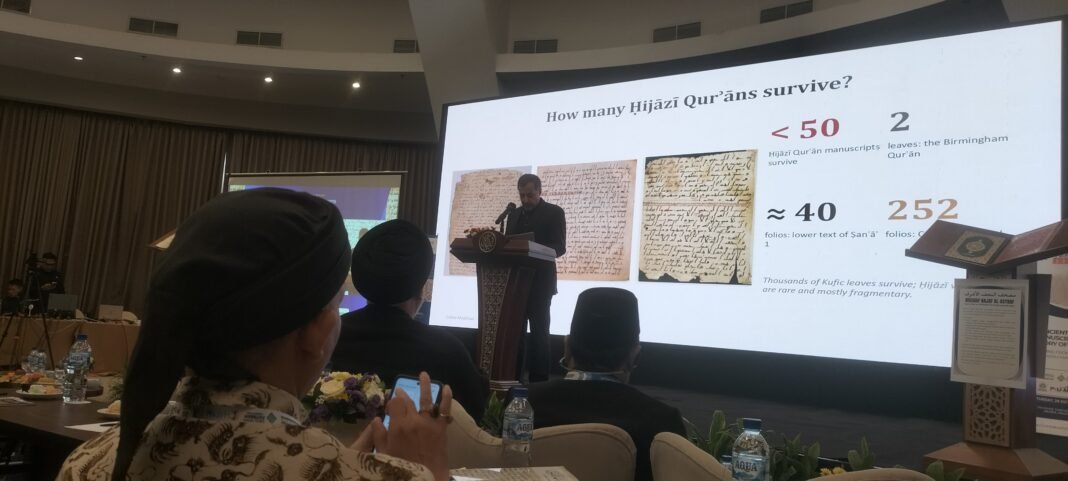
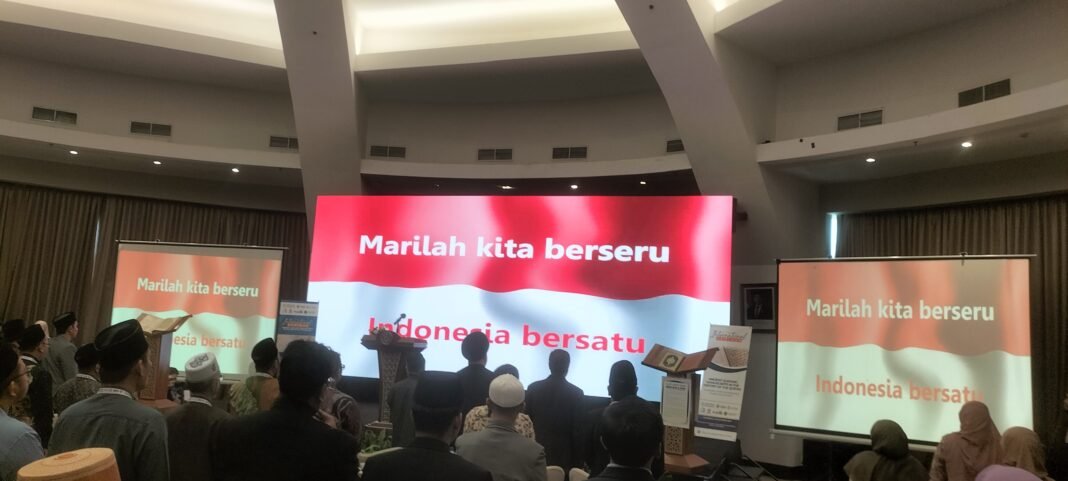
KOMPAS.SBS — JAKARTA, INDONESIA**mk— The historical study of the Qur’an took center stage at an international seminar entitled *“Ancient Qur’anic Manuscripts in the History of the Qur’an: Learning from the Mashhad Razavi Manuscript,”* held on Saturday, October 24, 2026. The event was reportedly attended by hundreds of invited guests and participants, reflecting considerable interest in the academic examination of ancient Qur’anic manuscripts and the preservation of Islamic intellectual heritage.
The seminar placed the Mashhad Razavi Manuscript at the heart of its discussions, highlighting the importance of examining historical documents through rigorous research, reliable evidence, and established scholarly methodologies.
Beyond serving as a gathering for academics and researchers, the event provided a platform for exchanging ideas on Qur’anic history, manuscript traditions, textual transmission, and the responsibilities involved in studying and preserving historical religious materials.
The strong reported attendance underscored the importance of creating broader opportunities for academic engagement. It also reinforced the need for continued research, transparent scholarly communication, and institutional cooperation to ensure that discussions about ancient manuscripts contribute meaningfully to the development of knowledge.
## MASHHAD RAZAVI MANUSCRIPT EMERGES AS A KEY FOCUS OF ACADEMIC ATTENTION
The Mashhad Razavi Manuscript was identified as the central subject of the seminar, which explored the role of ancient manuscripts in understanding the history of the Qur’an.
Historical manuscripts are more than physical documents. They preserve material and textual evidence that can help researchers investigate writing practices, copying traditions, manuscript production, and the historical circumstances in which texts were transmitted and preserved.
Through careful examination, scholars can investigate features such as script, page structure, material composition, textual characteristics, and other relevant historical evidence. Depending on the available material, researchers may also compare manuscripts and examine how their characteristics relate to broader developments in the history of Qur’anic writing.
However, the study of ancient manuscripts requires discipline and methodological precision. Claims concerning a manuscript’s date, provenance, textual characteristics, or historical significance must be supported by appropriate evidence and carefully explained research methods.
For that reason, academic discussion of the Mashhad Razavi Manuscript must go beyond general descriptions and seek a deeper understanding of the evidence, research questions, and scholarly interpretations associated with it.
The purpose of rigorous manuscript research is not to promote unsupported conclusions, but to establish a clearer historical understanding through systematic investigation.
## SCHOLARLY RIGOR AND HISTORICAL EVIDENCE MUST COME FIRST
Research into ancient Qur’anic manuscripts demands a careful balance between respect for religious heritage and the standards of historical scholarship.
Researchers must distinguish between documented facts, scholarly interpretations, and questions that remain unresolved. Historical conclusions should be presented in proportion to the strength of the available evidence, rather than being overstated or simplified for public consumption.
Such standards are particularly important when dealing with religious texts that hold profound significance for Muslim communities around the world.
The examination of manuscripts requires researchers to consider the historical context of the documents, assess the reliability of relevant sources, and explain the limitations of their findings. Where different interpretations exist, those differences should be discussed through reasoned academic arguments and evidence-based analysis.
The seminar’s theme therefore raises an important issue for the wider academic community: how can research into ancient Qur’anic manuscripts be made more accessible to the public while maintaining the highest standards of accuracy and intellectual responsibility?
A strong academic culture depends on openness to evidence, careful evaluation of arguments, and a willingness to refine conclusions when new information becomes available.
## PROMINENT SPEAKERS AND ACADEMIC CONTRIBUTORS
According to the event’s published materials, Prof. Dr. KH. Nasaruddin Umar, M.A., was listed as the *Keynote Speaker*. Dr. Morteza Karimi Nia was listed as the *Main Speaker*, with the seminar focusing on ancient Qur’anic manuscripts in the context of Qur’anic history.
Other speakers listed in the event program included:
– Prof. Dr. M. Darwis Hude, M.Si.
– Prof. Dr. Phil. Sahiron Syamsuddin, M.A.
– Mooh Manachem Ali, M.Min.
– Dr. A. Hakim Syukrie, M.Si.
Muhammad Havid Rahim, M.A., was listed as the moderator.
The participation of scholars with different academic backgrounds was expected to broaden the discussion and provide participants with multiple perspectives on the study of ancient manuscripts.
Such forums can create opportunities to examine research methods, discuss historical interpretations, and explore the relationship between manuscript evidence and the broader development of Qur’anic scholarship.
The contribution of each speaker, however, is ultimately measured by the substance of the discussion, the strength of the evidence presented, and the extent to which the exchange advances scholarly understanding.
## INSTITUTIONAL COOPERATION IS ESSENTIAL TO ADVANCING MANUSCRIPT STUDIES
The seminar’s published materials listed several institutions associated with the event, including Cinta Kasih Fatimah Foundation, Khatam, Universitas PTIQ Jakarta, RUKMI, and the Lajnah Pentashihan Mushaf Al-Qur’an of Indonesia’s Ministry of Religious Affairs.
Institutional cooperation is an important foundation for developing sustainable research programs, supporting academic publications, and expanding access to knowledge concerning the history of the Qur’an.
Universities, research institutions, foundations, manuscript custodians, and relevant government bodies can contribute through scholarly collaboration, research funding, academic training, documentation, and public education.
Nevertheless, institutional involvement should not be measured solely by participation in seminars or other ceremonial activities. Its broader value lies in the research opportunities created, the quality of academic outputs, and the long-term benefits delivered to scholars, students, and the public.
A meaningful institutional commitment requires sustained work beyond a single event. This may include supporting independent research, facilitating scholarly exchanges, publishing findings, and developing educational programs that encourage younger generations to engage with historical sources.
The seminar offers an opportunity to strengthen these efforts and establish a clearer path from academic discussion to practical outcomes.
## PRESERVING ANCIENT MANUSCRIPTS REQUIRES CONCRETE ACTION
The preservation of ancient Qur’anic manuscripts is an essential part of protecting Islamic intellectual heritage.
Manuscripts may contain valuable historical evidence, but their continued survival cannot be taken for granted. Physical deterioration, unsuitable storage conditions, environmental factors, and inadequate documentation can place historical materials at risk.
Preservation therefore requires systematic cataloguing, appropriate conservation measures, professional documentation, and digitization where feasible and permitted by the relevant custodians.
Digital access can expand research opportunities and allow scholars in different countries to study manuscript images and related documentation. However, digitization must complement rather than replace the careful physical preservation of original materials.
Access arrangements must also respect ownership, conservation requirements, and applicable policies governing historical collections.
Educational institutions, researchers, manuscript custodians, and public authorities should work together to ensure that historically significant materials remain protected and available for responsible study.
The international seminar should therefore be viewed as an opportunity to strengthen awareness of preservation needs and encourage practical cooperation among institutions working in this field.
## FROM ACADEMIC DISCUSSION TO PUBLIC KNOWLEDGE
One of the major challenges facing specialized academic research is ensuring that its findings reach the wider public in a clear, accurate, and responsible manner.
Research on ancient Qur’anic manuscripts can involve technical terminology, complex historical questions, and detailed textual analysis. Without effective communication, important findings may remain confined to academic circles or be misunderstood when presented without sufficient context.
Universities, researchers, and participating institutions can help address this challenge by publishing accessible research summaries, organizing public lectures, developing educational materials, and providing reliable documentation of research findings.
Media organizations also have an important responsibility to report academic developments accurately. Journalistic coverage should distinguish between confirmed information, statements made by researchers, and interpretations that require further examination.
Claims about the historical significance of a manuscript should not be exaggerated, and unresolved research questions should not be presented as established facts.
By maintaining these standards, academic institutions and the media can help the public develop a more informed understanding of Qur’anic history while respecting both scholarly integrity and religious sensitivities.
## INTERNATIONAL DIALOGUE CAN STRENGTHEN QUR’ANIC HISTORICAL RESEARCH
International academic forums provide opportunities for researchers to exchange knowledge, compare methodologies, and develop collaborative approaches to complex historical questions.
The study of ancient Qur’anic manuscripts can benefit from cooperation across disciplines, including history, philology, codicology, textual studies, and other relevant fields.
Each discipline contributes different tools for examining historical documents. When combined carefully, these approaches can provide a more comprehensive understanding of manuscript characteristics, transmission practices, and historical contexts.
International cooperation can also support the development of shared research standards, scholarly publications, and opportunities for younger researchers to receive training in manuscript studies.
However, productive collaboration requires more than bringing scholars together. It depends on sustained communication, transparent research practices, reliable documentation, and a shared commitment to evidence-based scholarship.
The seminar’s international theme provides a valuable framework for encouraging such cooperation, with the Mashhad Razavi Manuscript serving as the focal point for discussion.
## PUBLIC INTEREST MUST BE FOLLOWED BY MEANINGFUL RESULTS
The reported attendance of hundreds of invited guests and participants demonstrates substantial interest in the seminar. Yet attendance alone cannot determine the long-term value of an academic event.
The more important question is what follows after the discussions conclude.
Will the event lead to additional research? Will relevant findings be published and made accessible? Will institutional cooperation result in further academic programs? Will students and younger researchers receive greater opportunities to study ancient manuscripts?
These are important measures of the lasting contribution that an international seminar can make to the development of knowledge.
The institutions involved are encouraged to build on the event through concrete research initiatives, accessible publications, responsible manuscript documentation, and continued academic engagement.
Such follow-up efforts would help transform public interest into a sustained contribution to the study and preservation of Islamic intellectual heritage.
## CONCLUSION: STRENGTHENING RESEARCH, PRESERVING HERITAGE, AND UPHOLDING ACADEMIC INTEGRITY
The international seminar entitled *“Ancient Qur’anic Manuscripts in the History of the Qur’an: Learning from the Mashhad Razavi Manuscript”* placed an important subject of historical and academic inquiry before an audience reportedly numbering in the hundreds.
By focusing on the Mashhad Razavi Manuscript, the event highlighted the continuing importance of studying ancient Qur’anic materials through careful research, reliable evidence, and responsible interpretation.
Its broader significance lies in the opportunity to strengthen academic collaboration, promote public understanding, and encourage sustained efforts to preserve manuscripts for future generations.
Ultimately, the success of such a forum must be demonstrated through the quality of its scholarship and the tangible outcomes that follow. Research findings must be carefully documented, historical claims must be supported by evidence, and institutional cooperation must produce meaningful benefits beyond the seminar itself.
With sustained commitment from researchers, educational institutions, manuscript custodians, and other relevant stakeholders, the study of ancient Qur’anic manuscripts can continue to contribute to a deeper understanding of Qur’anic history and the preservation of Islamic intellectual heritage.
**KOMPAS.SBS**
EDITOR: DAVID E., S.E.