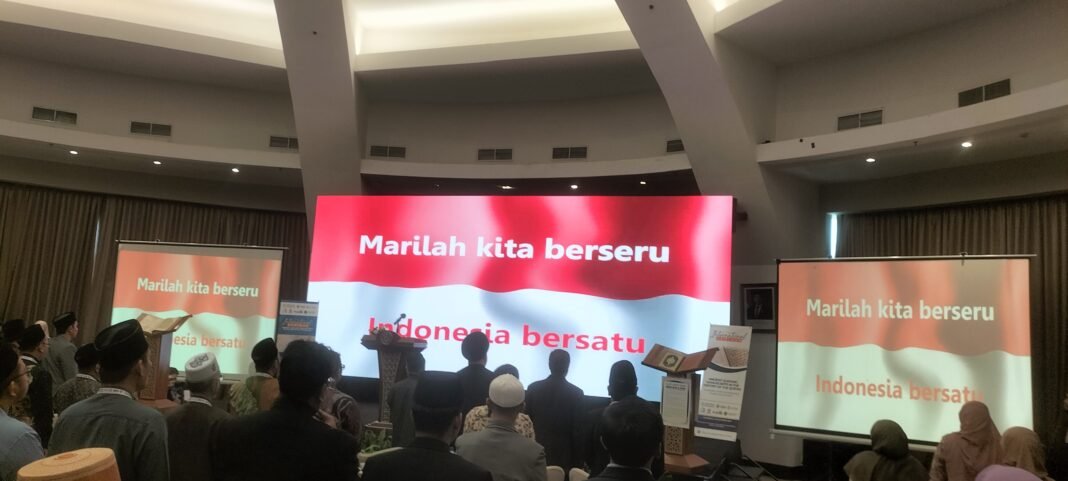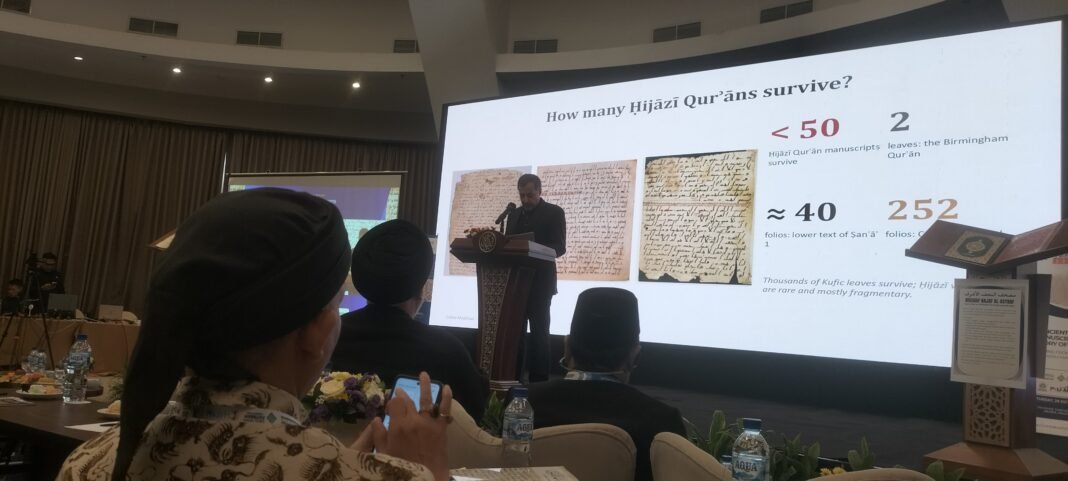
KOMPAS.SBS — JAKARTA — An international seminar entitled “Ancient Qur’anic Manuscripts in the History of the Qur’an: Learning from the Mashhad Razavi Manuscript”drew significant attention to the historical study of the Qur’an through ancient manuscripts. Held on Saturday, October 24, 2026, the event was reportedly attended by hundreds of invited guests and participants.
The seminar placed the Mashhad Razavi Manuscript at the center of academic discussion, highlighting the importance of studying the history of the Qur’an, manuscript traditions, and the development of Qur’anic scholarship through historical sources.
The reported attendance reflected strong interest in the study of Islamic intellectual heritage. The event also provided an opportunity for academics, researchers, and members of the public to deepen their understanding of manuscript research and its contribution to historical scholarship.
Ancient Qur’anic manuscripts are important historical sources that preserve textual and material evidence of writing traditions from earlier periods. Through systematic examination, researchers can investigate handwriting styles, manuscript structure, copying practices, and the historical contexts associated with these documents.
The study of ancient manuscripts requires rigorous methodology and careful interpretation. Conclusions regarding a manuscript’s age, origin, and historical significance must be supported by reliable evidence and appropriate academic methods.
The discussion of the Mashhad Razavi Manuscript therefore represents an opportunity to encourage a more comprehensive understanding of Qur’anic history while strengthening scholarly standards in manuscript research.
Researchers must distinguish verified findings from interpretations and ensure that conclusions are presented accurately, transparently, and responsibly.
According to the event’s published materials, Prof. Dr. KH. Nasaruddin Umar, M.A., was listed as the Keynote Speaker, while Dr. Morteza Karimi Nia was listed as the *Main Speaker*.
Other speakers listed in the program included:
– Prof. Dr. M. Darwis Hude, M.Si.
– Prof. Dr. Phil. Sahiron Syamsuddin, M.A.
– Mooh Manachem Ali, M.Min.
– Dr. A. Hakim Syukrie, M.Si.
The seminar discussion was scheduled to be moderated by Muhammad Havid Rahim, M.A.
The involvement of scholars from different academic backgrounds was expected to broaden the discussion of Qur’anic manuscripts, including research methodologies, textual analysis, philology, and the historical development of manuscript traditions.
The exchange of knowledge and perspectives is an important part of building a strong academic environment in which historical claims can be examined critically and supported by evidence.
The event’s published materials listed several institutions associated with the seminar, including Cinta Kasih Fatimah Foundation, Khatam, Universitas PTIQ Jakarta, RUKMI, and the Lajnah Pentashihan Mushaf Al-Qur’an of Indonesia’s Ministry of Religious Affairs.
Institutional cooperation is essential to advancing manuscript research, strengthening scholarly publications, and expanding educational opportunities for younger generations.
However, the impact of an international seminar should extend beyond the event itself. Follow-up initiatives, including research publications, academic documentation, educational materials, and public outreach programs, are important to ensure that the knowledge discussed reaches a broader audience.
Clear and responsible communication can help make complex academic findings accessible to the public without sacrificing scholarly accuracy.
The study of ancient Qur’anic manuscripts is closely connected to the preservation of Islamic intellectual heritage.
Preservation efforts require proper cataloguing, physical conservation, documentation, and digitization where appropriate. Access to historical manuscripts must also be managed responsibly to protect valuable collections while supporting legitimate academic research.
Educational institutions, researchers, manuscript custodians, and other relevant stakeholders need to strengthen cooperation to ensure that historical materials remain protected and available for future generations.
The seminar is expected to encourage further research, promote public awareness of Qur’anic history, and strengthen efforts to preserve ancient manuscripts as an important part of the world’s intellectual and cultural heritage.
Historical research into the Qur’an requires both respect for religious heritage and rigorous scholarly investigation. Researchers must carefully examine sources, consider historical contexts, distinguish established facts from interpretations, and avoid conclusions that are not supported by sufficient evidence.
International academic forums provide opportunities to encourage open discussion, exchange research findings, and evaluate arguments through evidence-based analysis.
The reported participation of hundreds of guests and attendees demonstrates considerable public interest in the study of ancient Qur’anic manuscripts. Nevertheless, the success of such an event should not be measured solely by attendance figures or the number of speakers, but also by the quality of its discussions, the knowledge generated, and the practical outcomes that follow.
The international seminar on the Mashhad Razavi Manuscript is expected to contribute to the continued development of Qur’anic historical research, strengthen academic collaboration, and encourage the responsible study and preservation of Islamic intellectual heritage.
Through sustained research, institutional cooperation, and public education, ancient Qur’anic manuscripts can continue to serve as valuable sources for understanding the history of the Qur’an and the development of Islamic scholarship.
KOMPAS.SBS
EDITOR: DAVID E., S.E.